
Curtains normally come with drilling, brackets, and heavy hardware. But not everyone is able or even wants to drill their walls. Tenants are likely to be faced with harsh lease provisions, and many land owners are simply not interested in a “no damage” strategy. The best part is, you don’t have to use a traditional curtain rod to decorate your windows.
This guide will help you find 12 tried and tested ways to hang curtains without rods. All methods are easy, cheap, and appropriate for a range of rooms, curtain weights,s and styles. You can get one that fits your window, even if you are living in a rental unit or a dorm, or even if you have windows that are not rectangular.
Why Choose a No-Rod Curtain Solution?

To appreciate different methods, it is beneficial to first know why a large number of people are opting for the rod-free options. With old-fashioned curtain rods, you must drill holes into the wall, invalidating rentals or forfeiting your deposit. In addition to rental restrictions, various other considerations make these alternatives an option.
Typically, no-rod methods are quicker to set up. Most options will take just a couple of minutes and no special equipment. They are also less expensive as you do not need to purchase expensive brackets, finials, and long metal rods. Plus, there are these methods that offer you flexibility. There are ways of altering your room’s appearance without the hassle of patching holes or repainting walls.
Rod-free solutions are also perfect for smaller areas like small bathroom windows, narrow kitchen openings, glass doors, and metal frames where regular rods cannot be placed. You can get a sleek, designer look without adding one screw if you’re a bit creative.
Things to Consider Before You Start
Take some time to evaluate your situation before selecting a method. Three primary factors determine which is the right option.
The first thing you need to find out is whether your curtains are heavy. Sheer and lightweight panels can be used with almost any type of method, whereas heavy blackout drapes need stronger supports. Secondly, check your wall surface. Adhesive products work best on smooth painted walls and textured walls; brick or wallpaper may not be able to support sticky hooks. Third, consider the type of windows you have. Some methods can be used only for wooden frames, and others, only for metal doors, while a few require support from the surrounding walls.
After comprehending these factors, you can select the most reliable one in your home.
How to Hang Curtains Without a Rod: 12 Easy Ways
Tension Rods
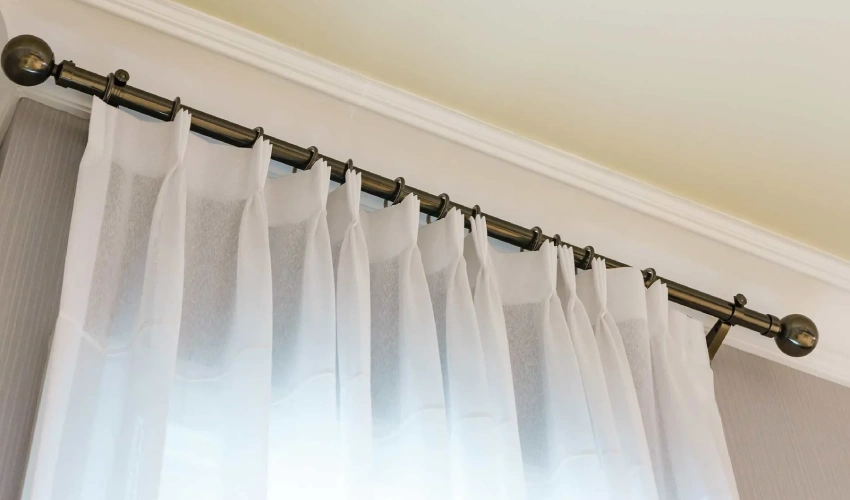
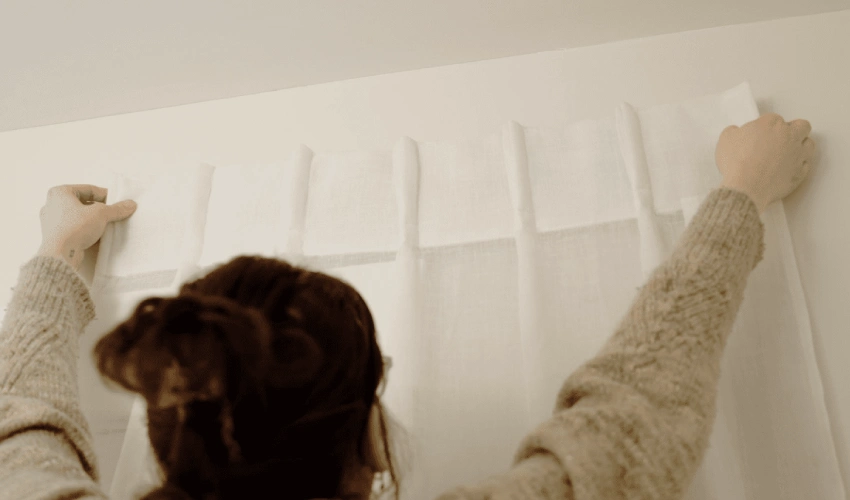
Tension rods are bars that are held in place with a spring and fit tightly between two surfaces, such as a window frame. They are held down by means of internal pressure, without the use of screws or adhesives. They are one of the easiest to use no-drill options, particularly for renters.
Installation of tension rod:
- Measure the inside width of your window frame.
- Buy a tension rod that is slightly longer than the measurement.
- Twist the rod to extend it close to the required length.
- Place one end against the frame and apply pressure to fit the other end.
- Adjust the rod until it is level and feels secure.
Ideal for: lightweight to medium-weight curtains, sheer panels, café curtains, bathroom, and kitchen windows.
Limitations: Tension rods are not able to support heavy blackout curtains or thick velvet drapes, as the weight may cause them to slip or drop.
Adhesive Command Hooks
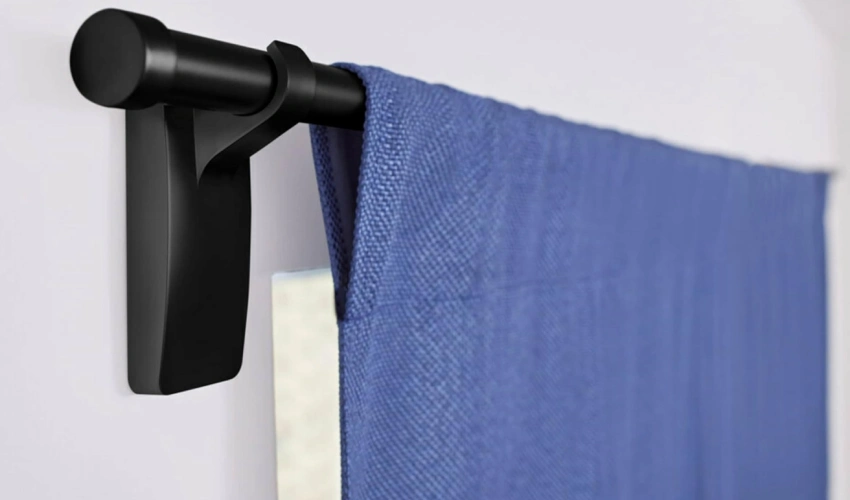
Command hooks are adhesive hooks that can simply be removed from a wall. They are ideal for installing light curtains in rentals and dorms. The strong adhesive is capable of supporting quite a lot of weight if used properly.
Command hook curtain ideas:
- Clean the wall area with rubbing alcohol and let it dry completely.
- Stick one hook on each side of the window, slightly above the frame.
- Press firmly for at least 30 seconds and wait one hour before adding weight.
- Place a thin rod or dowel across the hooks.
- Hang your curtains from the rod using clips or rings.
Use for: Sheer curtains, light cotton, and linen panels in rooms where drilling is not permitted.
Limitations: Most adhesive hooks can hold 3-7 pounds per hook. May not adhere to textured walls, wallpaper, or freshly painted walls.
No-Drill Tap-In Brackets
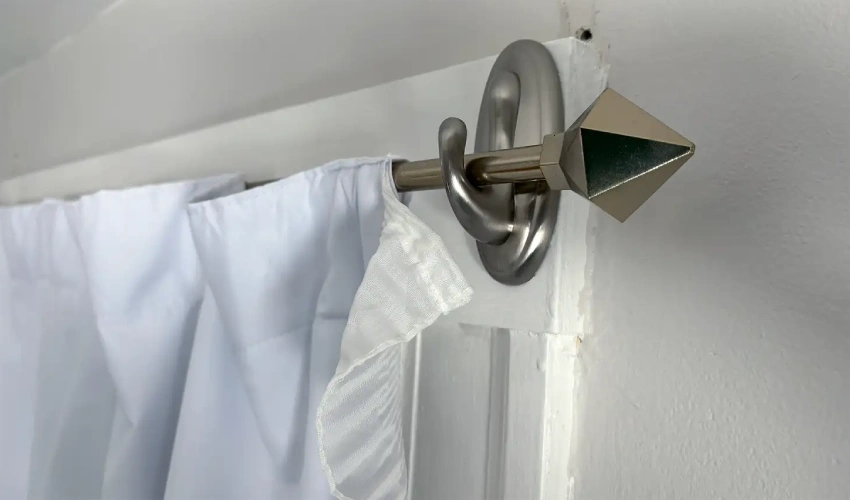
No-drill tap-in brackets (like Kwik-Hang style brackets) are manufactured for wooden frame windows. They rely on little nails that are included in the top of the window trim. They can be installed on a regular curtain rod, and they can be used to hang heavier curtains than adhesive curtain rods.
How to install tap-in brackets:
- Position one bracket on each top corner of the window trim.
- Use a small hammer to gently tap the bracket into the wood.
- Repeat on the opposite side, ensuring both brackets are level.
- Place your curtain rod into the bracket slots and hang your curtains.
Perfect for: Medium to heavy curtains, traditional and modern homes, and ceilings with wooden frames.
Limitations: They can only be attached to wooden window casings. They are not to be used on metal frames, drywall, or windows (no trim).
Magnetic Curtain Rods
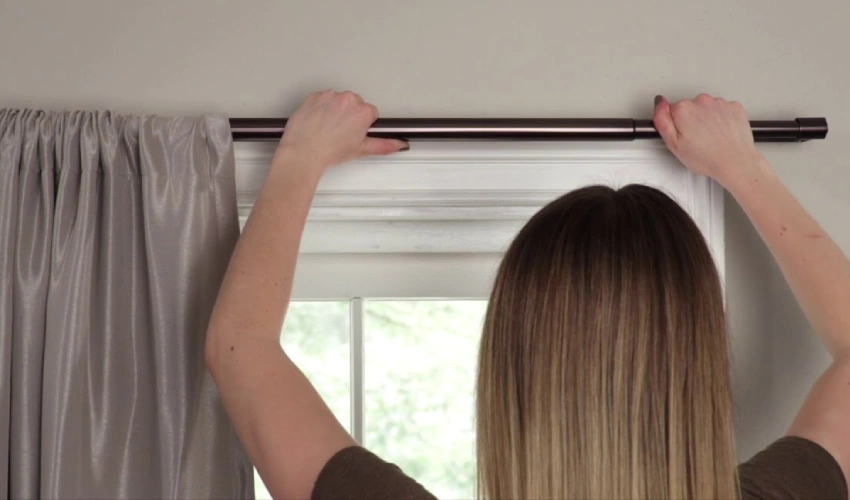
Magnetic curtain rods are lightweight and short rods that have powerful magnets on either end. They do not need any tools to attach them to metal surfaces. These are great for steel doors, metal window frames, refrigerators, or office partitions.
How to install magnetic curtain rods:
- Clean the metal surface with a damp cloth and let it dry.
- Thread your curtain panel through the rod.
- Place one magnet against the top corner of the metal surface.
- Attach the other end and adjust until the rod is straight.
Suitable for: metal entry doors, steel window frames, narrow side panels, and small kitchen windows.
They can only be used on magnetic surfaces. Can’t hold very heavy curtains and may move when bumped often.
Suction Cup Rods
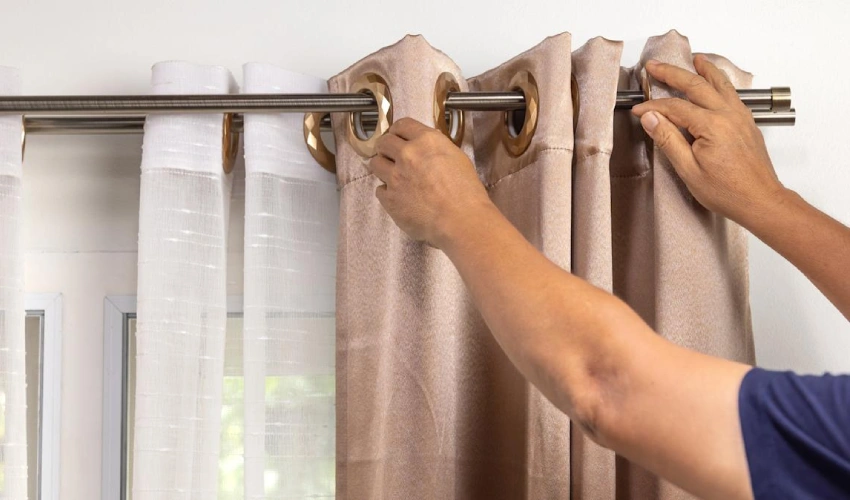
The suction cup rods employ a vacuum to grab onto non-porous, smooth surfaces like glass, tile, or mirrors. They are mostly used in bathrooms, but can also be effective in small windows with a glass border or in the kitchen.
How to install suction cup rods:
- Clean the glass or tile surface thoroughly with glass cleaner.
- Press each suction cup firmly against the surface.
- Twist or press the lever to lock the suction.
- Hang lightweight curtains using clips or rings.
Ideal for use on: Bathroom windows, glass shower doors, tile walls, and small kitchen windows.
Limitations: Suction cups can lose their grip over time, particularly in hot, humid rooms. They are only able to support very light fabrics.
Decorative Pulls or Cabinet Knobs
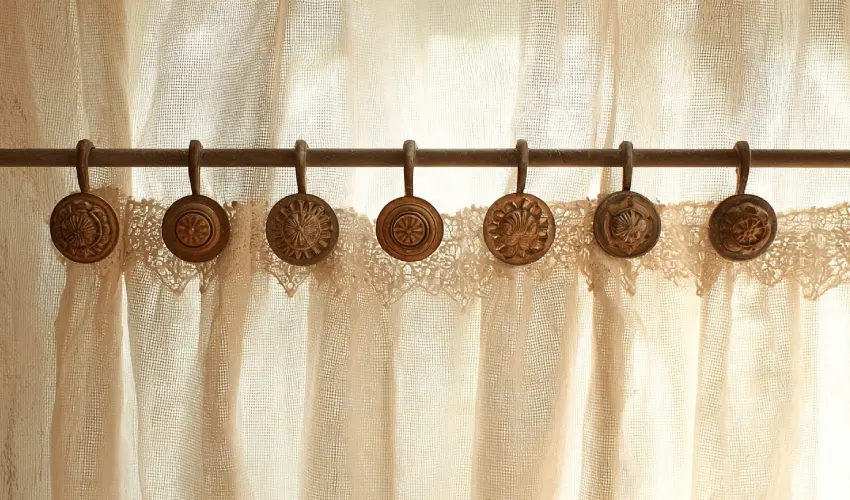
Instead of curtain rods, use cabinet knobs and drawer pulls to create a funky and fashionable touch. They provide your window with a custom-made and elegant appearance. This technique does involve very small screws, but it results in much less destruction to the wall than a complete curtain rod job.
How to hang curtains with cabinet knobs:
- Install decorative knobs that complement the style of the room.
- Mark the wall to indicate the location of each knob above the window, evenly distributed.
- Tap wall anchors and screw in the knobs.
- Use ribbon ties, fabric loops, or drape curtain fabric over the knobs.
Ideal for: Lightweight curtains, decorative window treatments, vintage or eclectic interior.
Limitations: Not 100% damage free, as small screws or anchors still have to be used. Heavy drapes may not have enough support to stay in place.
PVC Pipes
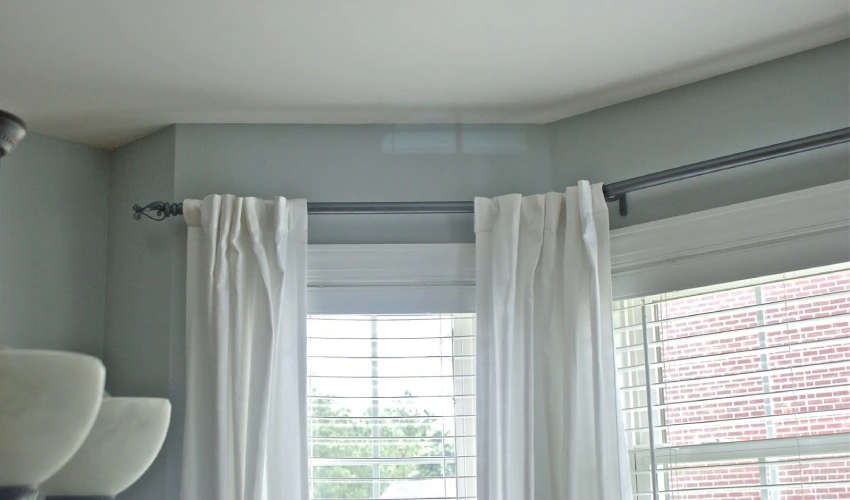
The PVC pipes are a cheap and adaptable option to the conventional rods. They’re available at any hardware store, can be trimmed to fit, and even painted to complement the decor. PVC Pipes can appear very upscale with creative end caps and finials.
How to make a PVC pipe curtain rod:
- Measure your window width and add a few extra inches on each side.
- Cut a PVC pipe to the required length.
- Paint or wrap the pipe in fabric to match your style.
- Mount it using adhesive hooks, pipe straps, or wall brackets.
- Slide curtain rings onto the pipe before securing the second end.
Ideal for: wide windows, DIY projects on a budget, bay windows, and curved installations.
Limitation: PVC can droop with heavy fabrics if the pipe is too thin. A pipe large enough (1 to 1.5 in. diameter or larger) is preferred.
Wooden Dowels
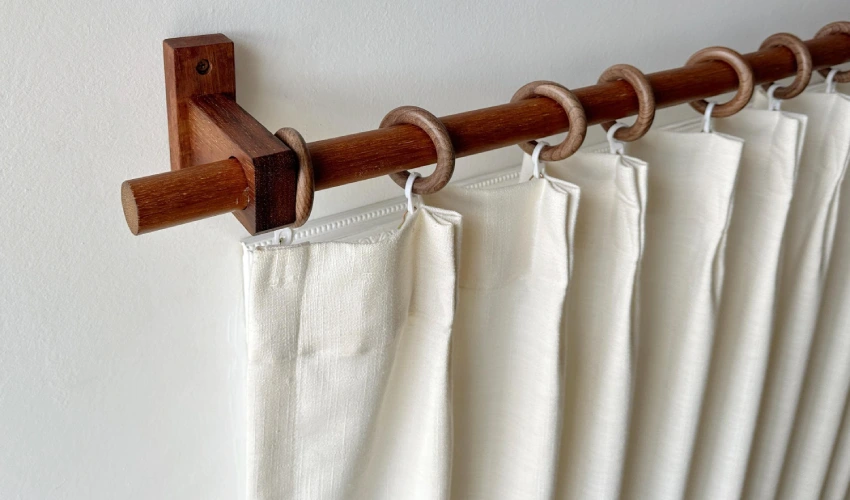
Wooden dowels are natural, rustic in style, and can be found at craft and hardware stores. They are more durable than PVC and can be stained, painted, or left untreated. They look great in farmhouse, boho, and Scandinavian style decorating.
Installing wooden dowel curtain rods:
- Use a dowel thick enough for the weight of your curtain.
- Cut the dowel to your desired length.
- Sand and finish wood as necessary.
- Use rope hangers, leather straps, or adhesive hooks to mount on the wall.
- Trim off ends or add finials for a neat finish.
Suitable for: Farmhouse, boho, Japandi, and natural rooms.
Limitations: Long dowels may bend in the middle if not supported adequately. For spans > 48 inches, use the center bracket.
Rope or Wire System

A rope or wire system results in a relaxed and casual appearance, perfect for coastal, bohemian, and industrial designs. This setup involves a sturdy rope between two anchor points and then hanging curtains with clips or rings.
Procedure for installing a rope/wire curtain system:
- Attach two strong hooks or wall anchors on either side of the window.
- Cut a length of sturdy rope, jute, or steel wire.
- Tie or clamp each end to the hooks, ensuring the line is taut.
- Slide curtain rings or clips onto the cord before attaching the second end.
- Clip your curtains in place and adjust as needed.
Ideal for: Bohemian, coastal, nautical, and industrial style rooms.
Limitations: There is a slight amount of sag with heavy fabrics on ropes and wires. For medium-weight curtains, opt to use a thicker rope or steel cable.
Curtain Rings with Clips
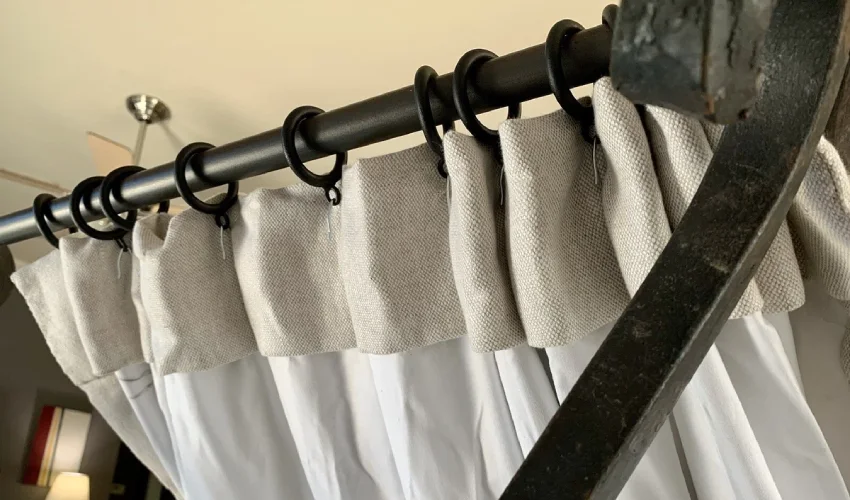
Curtain rings come with built-in clips and do away with the need for sewn curtain headers. The rings can be nailed to the wall, and the cloth attached by clipping. This technique can be used in conjunction with adhesive hooks or small wall anchors.
Using curtain rings with clips:
- Mark evenly spaced points above your window frame.
- Install adhesive hooks or small screws at each point.
- Hang the curtain rings on the hooks.
- Clip your curtain panels onto each ring.
- Adjust the spacing for a smooth, even drape.
Great for: Making custom looks, swapping fabrics, and layering curtains.
Drawbacks: This approach involves multiple hooks, resulting in a greater amount of installation. The spacing is critical for proper draping and avoiding uneven drapes.
Velcro Strips
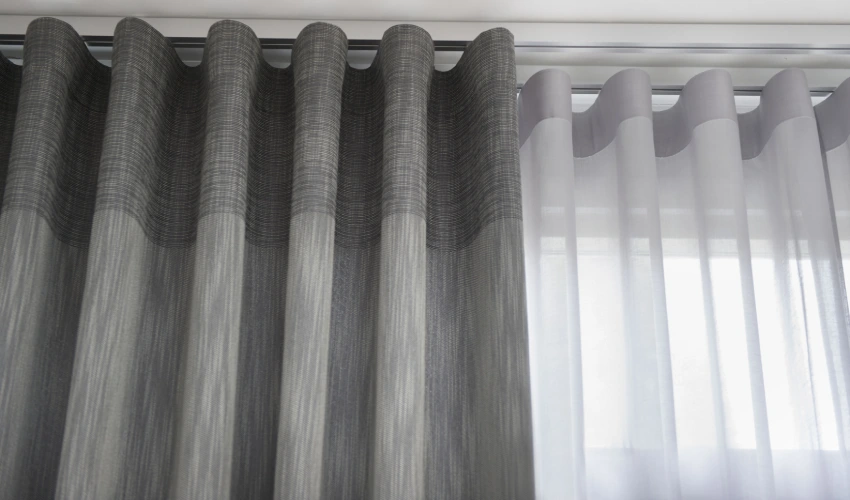
An unlikely but useful method for hanging lightweight curtains is with velcro strips, particularly the heavy-duty industrial type. One side is fixed against the wall, and the other side is fixed to the curtain. If squeezed, the curtain will remain stationary.
How to use Velcro for curtains:
- Cut Velcro strips to the width of your window.
- Stick the adhesive side firmly to the wall above the frame.
- Sew or iron the matching side onto the top edge of your curtain.
- Press the two sides together to secure the curtain.
Good for: Sheer curtains, valances, RVs, dorm rooms, and temporary décor.
Limits: Velcro can become less sticky over time. Not suitable for heavy or heavy-duty curtains that are moved often.
Macrame / Woven Wall Hangings
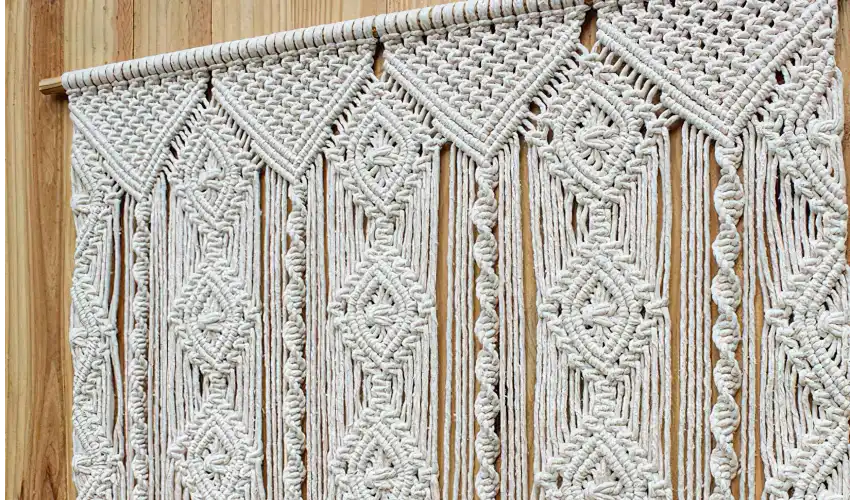
Macrame wall hangings provide a decorative and creative way to hang lightweight curtains. The woven pattern itself adds to the room’s decor, providing texture and warmth in the window space.
Macarama curtains hanging ideas:
- Mount a sturdy macrame wall hanging or woven panel above the window.
- Make sure the hanging is properly secured to support added weight.
- Use small clip rings to attach sheer curtains to the woven strands.
- Space the clips evenly across the width of the panel.
Ideal for: Boho, eclectic, and artistic decor.
Restriction: Just for extremely light-weight, sheer fabrics. Thicker drapes can mess up or harm the macrame pattern.
Quick Comparison Table: Choosing the Right Method
To help you decide which option suits you best, the following table compares all 12 methods based on key factors.
| Method | Best Curtain Weight | Wall Damage | Difficulty | Cost |
|---|---|---|---|---|
| Tension Rods | Light to Medium | None | Easy | Low |
| Command Hooks | Light | None | Easy | Low |
| Tap-In Brackets | Medium to Heavy | Minimal | Easy | Medium |
| Magnetic Rods | Light to Medium | None | Easy | Medium |
| Suction Cup Rods | Light | None | Easy | Low |
| Cabinet Knobs | Light to Medium | Small Holes | Medium | Medium |
| PVC Pipes | Medium | None to Minimal | Medium | Very Low |
| Wooden Dowels | Medium to Heavy | None to Minimal | Medium | Low |
| Rope or Wire | Light to Medium | Minimal | Medium | Low |
| Curtain Rings with Clips | Light | None | Easy | Low |
| Velcro Strips | Light | None | Easy | Low |
| Macrame Hangings | Very Light | None | Easy | Medium |
Designer Tips for a Polished Look
Without a rod, you don’t have to sacrifice style when hanging curtains. Your windows can look just as beautiful with the right approach, as with traditional hardware. Here are a few expert secrets to help you get a designer-approved finish.
- Hang curtains higher than the window. While most people hang curtains just above the window frame, designers suggest hanging them 4-6 inches above the window frame, or even closer to the ceiling. This creates the illusion of a higher ceiling and makes windows appear larger.
- Hang curtains wider than the width of the window. Measure 4 to 6 inches around the window to allow curtains to be drawn completely aside. This will introduce more natural light and will widen the window.
- Choose floor-length curtains. When curtains just hit the floor or are just half an inch above it, they look best. Short curtains can give a room an unfinished look, but floor-length curtains add elegance and balance.
- Use the correct weight curtain for the method. Always use a curtain fabric that can be upheld by your curtain hanging system. Heavy curtains with adhesive hooks will be short-lived, and light sheers don’t look good hanging on a tap-in bracket.
Possible Errors You May Make and Should Avoid
Even the simplest methods can go astray if you don’t practice best practices. Watch out for these common mistakes when hanging curtains without a rod.
- Skipping wall preparation is one of the most frequent issues. Adhesive products will not stick well to dusty, oily, or freshly painted walls. Always clean the surface with rubbing alcohol and let it dry completely before applying any sticky hooks or strips.
- Overloading lightweight systems is another common error. Tension rods, suction cups, and Command hooks have specific weight limits. Trying to hang heavy blackout curtains on these will cause failure. Always check the weight rating before installing.
- Ignoring measurements can ruin the entire look. Uneven hooks or crooked rods create a sloppy appearance. Use a measuring tape and a level to ensure everything is straight before locking it in place.
- Selecting the wrong method for your wall type also leads to problems. Adhesive options do not stick well to brick, textured walls, or wallpaper. Magnetic rods only work on metal. Choose your method based on your specific surface.
How to Care for Rod-Free Curtains
After you hang your curtains, you can maintain them to keep them in excellent condition and avoid accidents. Test the hanging system every few months. Ensure tension rods are not slipping, adhesive hooks are firmly in place, and ropes or wires are straight.
While washing, gently pull the curtains out of the window for washing. Do not pull down on the fabric; this may damage the hooks or pull the rod loose. If Command hooks are used, raise the curtain off the hook; don’t pull it.
Carefully open and close curtains, particularly those that are adhesive. Any abrupt, sharp movements add stress on the hooks and can lead to hook loss. Use your no-rod system as it is intended to be used, being the lightweight option, and it will serve you for many years.
Conclusion
No more compromising, hang your curtains rodless. There are 12 different ways, giving you the right solution for every window, room, and budget! Whether it’s tension rods or macrame hangings, there are several different ways to accomplish this.
The bottom line is that you need to find the right method for your situation. Take into account the weight of your curtains, the wall or window you’ll be hanging them on, and the desired appearance. If done properly, your curtains will look as if they were professionally installed, and there won’t be a single hole drilled.
These no-rod decoration techniques allow you to control the style of your home, whether you’re decorating a rental, a temporary space, or just want to skip the traditional hardware. Select the style that suits your lifestyle, carefully follow the instructions, and enjoy beautiful, well-dressed windows in minutes.
Keep visiting styleofhome.com to find more amazing information about other DIY home improvement projects.
Frequently Asked Questions
Can I hang heavy blackout curtains without a rod?
Answer
Yes, but you need to choose the right method. Heavy blackout curtains can be held up with tap-in brackets, wooden dowels, and PVC pipes, provided they are installed correctly. Don’t use lightweight solutions like Command hooks, suction cups, or thin tension rods; they simply won’t support the weight.
What is the easiest no-drill method for renters?
Answer
The tension rods are the simplest and also the most reliable for renters. They’re quick to install, won’t damage your windows, and can be used on most types of windows. They are also very inexpensive and can be used in various spaces.
Will adhesive hooks damage my walls when removed?
Answer
Good adhesive hooks, like Command brand ones, are made to be easily removed. Carefully follow removal instructions to prevent damage. Be sure to pull the adhesive tab slowly, straight down, and not yank the hook away from the wall.
How do I hang curtains on a metal door?
Answer
Magnetic curtain rods are the perfect solution for metal doors. They can be fastened without tools, and hold lightweight to medium curtains, plus, they can be removed without leaving marks. Ensure the surface is clean and flat to achieve the best grip.
Can I hang curtains without a rod on textured walls?
Answer
Textured walls can be difficult as they may not adhere to the adhesive products well. Tap-in brackets on the trim, tension rods inside the window frame, or small screws with cabinet knobs work best. Avoid sticky hooks and Velcro strips on rough surfaces.
What is the cheapest way to hang curtains without a rod?
Answer
PVC pipe and tension rods are the lowest-cost solutions. A PVC pipe is available for only a few dollars, and tension rods are very common and cheap. Little tools and effort are needed for both methods.
Read More Helpful Topics: